Read · Foundations
Grief, and the ground under you
A beginning for anyone new to grief. Rudo stays with the ground under a life, without asking the loss to become a lesson.
Rudo Maritsa · 5 min read · Free
Grief is not a test you pass. Grief is what love does when the shape of the world changes and the body has not agreed yet. If you are new to this, or if you have been in it so long that you feel ashamed of still being in it, you can sit down. Rudo will not hurry you toward a brighter sentence.
Foundations, here, means the ground. Not a theory. The ground under your feet on an ordinary day when something essential is missing, or when something essential has changed so much that missing is the closest word.
You do not have to name it perfectly
Some people arrive with a death. Some arrive with a marriage that ended, a friendship that went silent, a country left behind, a diagnosis, a faith that used to hold. Some arrive with a weight and no clean label. A clean label is not the entrance fee.
Rudo meets a lot of careful sentences from people who think the feeling is too small to count. A pet. A job. A version of a parent who is still alive and no longer easy to reach. If it changed the ground, it counts. Comparison is a poor host. Your loss does not need to win a contest against someone else's loss in order to deserve company.
You may also be the person who is fine in public and unsteady in the kitchen. That split is common. Public steadiness can be love for the people who depend on you. It can also be fear. You are allowed to have one room, or one page, or one walk, where the steadier face can rest.
What grief is not
Grief is not proof that your faith is weak, if faith is part of your life. Faith and sorrow have kept company for a very long time. A psalm can be a complaint. A prayer can be one tired line. God is not waiting for a polished mood.
Grief is not a disease to be ashamed of, and this essay is not medical advice. If sleep, food, or the will to stay has gone to a frightening place, tell a person who can help, or call a line that is there for exactly that weight. Needing help is not a failure of character. It is a wise reading of the moment.
Grief is not a schedule other people get to set. You may be offered stages, as if sorrow were a staircase with a landing marked acceptance. Some people find those maps useful. Many do not. If a map scolds you for visiting an old feeling again, the map is too small. Feelings return because love is not a queue.
The ground, felt simply
Try this, if you want something to do with your body and not only with your thoughts. Feel the chair. Feel your feet. Name three ordinary things you can see that are not the loss. A window. A cup. A tree. This is not a trick to erase the pain. It is a way of noticing that the ground is still a ground. You are still in a room. The room can hold you while the feeling moves through.
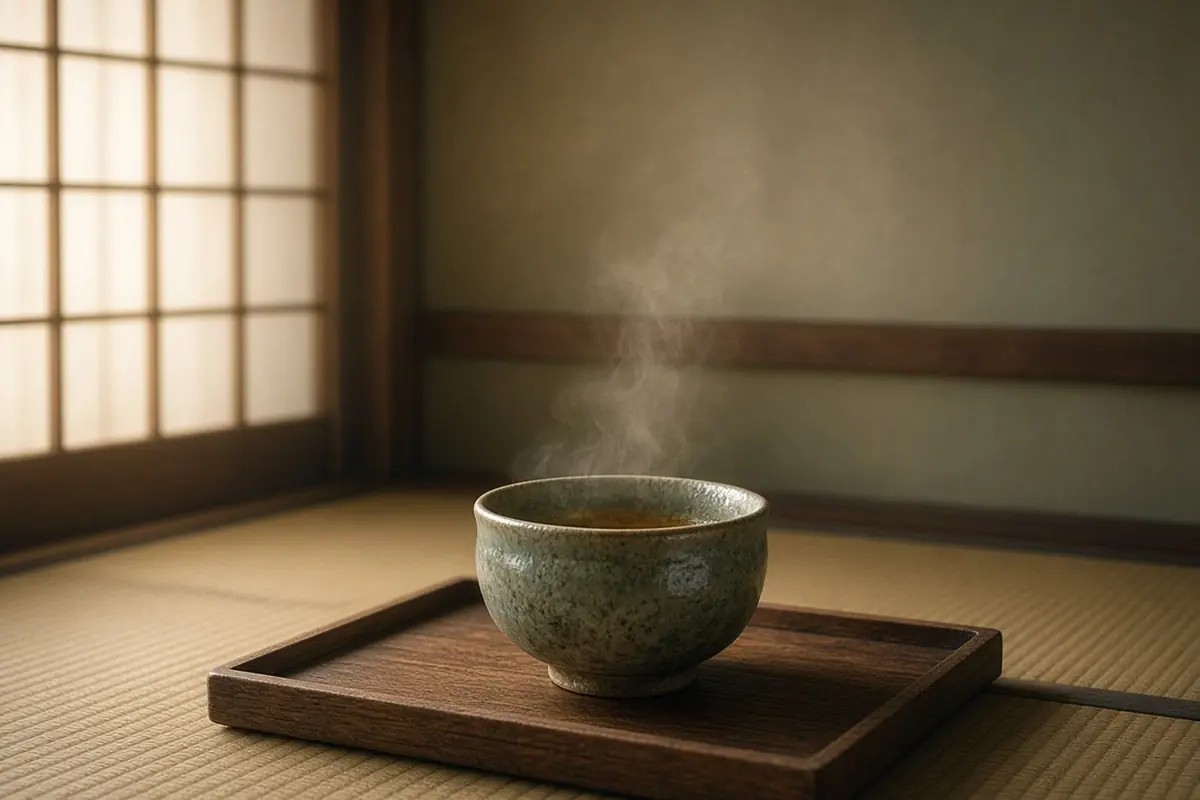
Rudo trusts small anchors more than large speeches. A cup of tea. A known song on the radio. A blanket. A short walk to the end of the path and back. Anchors do not fix a life. Anchors keep a person from having to invent strength out of nothing at the exact hour when nothing feels available.
If even the anchors feel far away, that distance is information, not a verdict. Sit nearer to whatever is closest. The radio can stay on. You do not have to listen as a project. Company can be a voice in the room while you do almost nothing. Almost nothing is sometimes the honest size of a day.
Company, and the people around you
Other people will want to help and will not know how. You can give a small instruction. Sit here. Wash the dishes. Do not tell me a meaning yet. Talk about the weather for ten minutes and then let the quiet in. Most people are relieved to be given a job. You are not being difficult. You are making care possible.
You can also say no. No to the visit that will drain you. No to the story of someone else's cousin, offered as proof that you should be coping faster. No is a complete sentence. A boundary is not a rejection of love. A boundary is how love keeps a shape you can live inside.
If you are the friend instead of the grieving person, the foundation is simpler than it looks. Show up. Use the name of the one who is gone, if a death is the loss. Do not correct the feelings. Do not fill every silence. Bring food if food helps, and do not require a lively host in return. Rudo would tell a friend: your presence is the point. Your advice can wait until someone asks.
Living on the same ground
Foundations are not the whole house. You will need other rooms: sleep, work, children, faith, the long work of a changed future. Those rooms can come later. Today, the ground is enough to study. You are here. The loss is real. The day is also real. All three can be true together, and no single one cancels the rest.
Rudo does not ask you to be inspired. Rudo asks you to be honest, at a pace your chest can bear. Honesty can be very quiet. It can sound like: this still hurts, and I am still here. That sentence is a foundation. You can build on it slowly, or you can simply stand on it and breathe.
If you want a next step after this page, choose one gentle thing and repeat it tomorrow. Repetition is how a frightened body learns that the ground has not entirely given way. You do not have to feel brave for the repetition to count.
A question to sit with
Where is the ground under you today, even a small patch of it, and what would help you stay there without pretending the loss is smaller than it is?