The Fourth Cup
Mono no aware, appreciating the passing nature of life
Mono no aware is a gentle awareness that all things pass, and that their passing is part of their beauty. Walking the dewy garden path and honouring the season in the cup, you'll learn to hold life's small beauties closely and its changes a little more loosely.
You will learn
- The meaning of mono no aware and the place of seasons in Japanese tea
- The tea garden path (roji) as a way of leaving the busy world behind
- How gratitude and gentle sadness can sit side by side
You'll practise: The seasonal cup. Bring one sign of the season to your tea and notice it while it lasts.
Sample data

Begin a take on the course page to open Part 1.
Key Japanese concepts
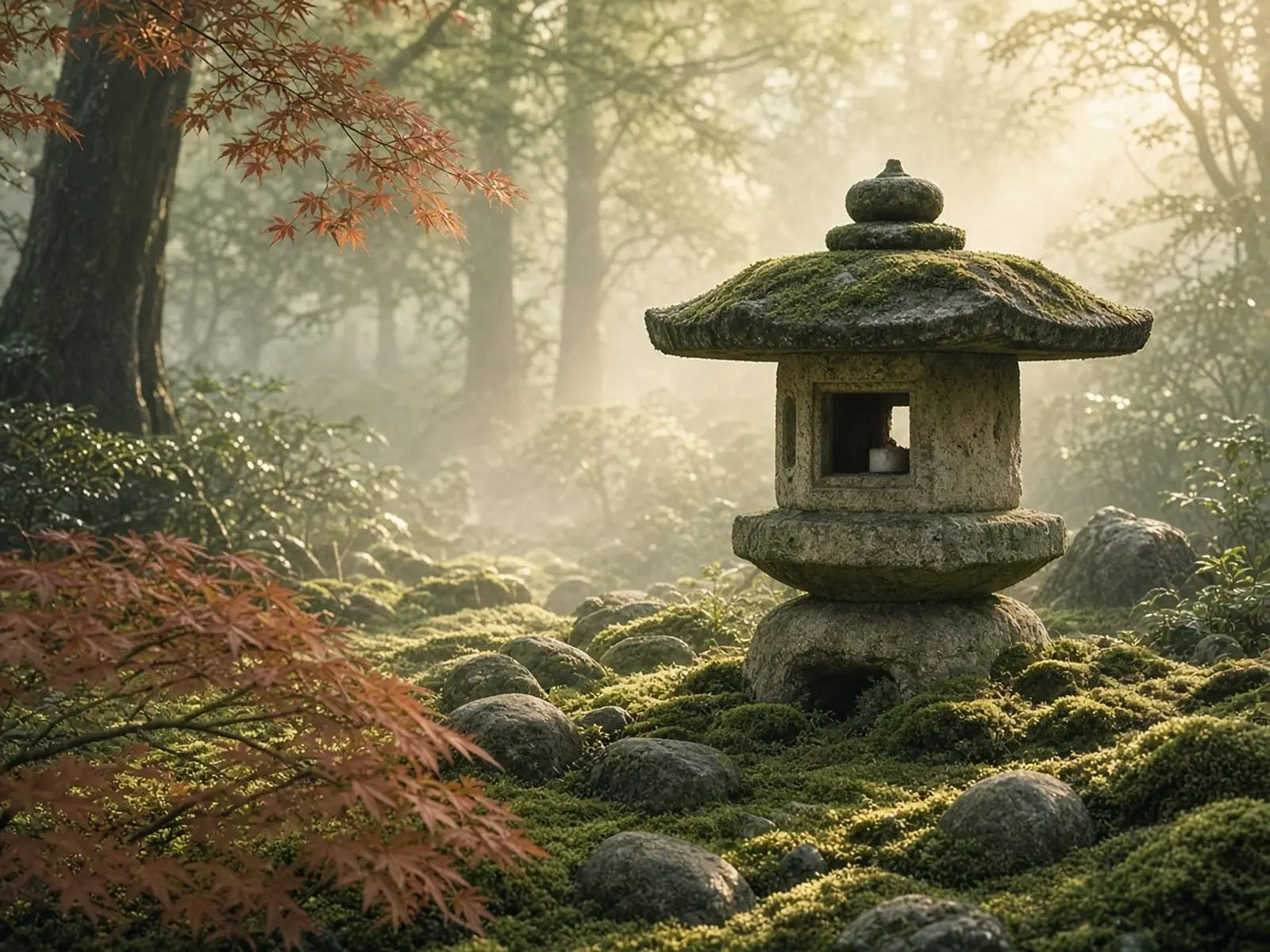
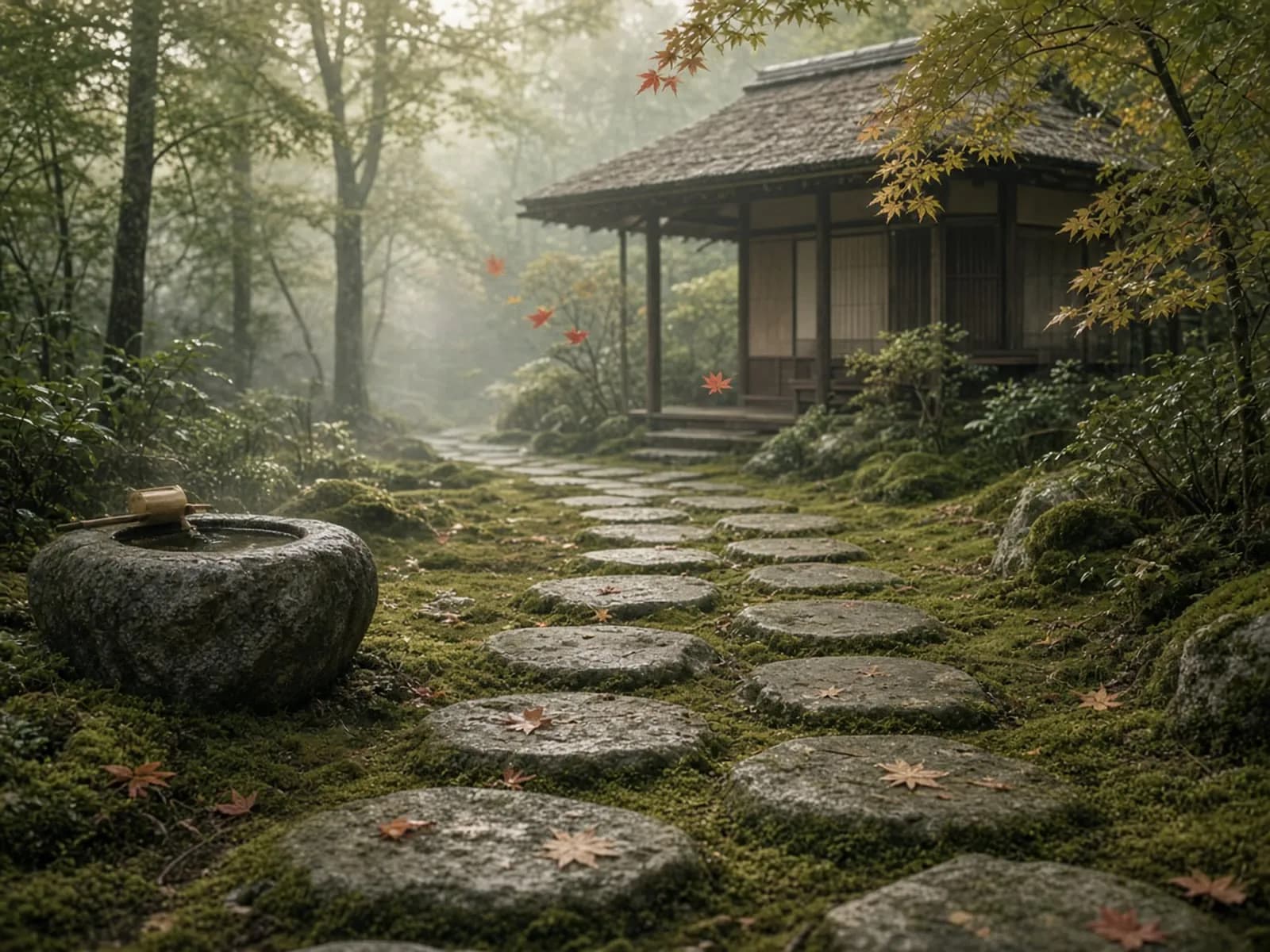
Roji (露地), the "dewy path" The garden path that leads guests to the tea room, often with stepping stones, moss, a stone lantern and a stone water basin (tsukubai), where guests may rinse their hands and mouth. Walking it slowly helps leave the busy world behind.
Mono no aware (もののあはれ) Often translated as "the pathos of things": a gentle, slightly wistful awareness of impermanence. Cherry blossoms are loved partly because they fall so soon. It's not despair, but a tender appreciation of beauty that doesn't last.
The seasons in tea Tea practice pays close attention to the time of year, through the flowers, scrolls, bowls and sweets chosen. In Australia our seasons have their own signs, such as wattle, jacaranda, summer storms and clear winter mornings. Noticing them is a way of being present.
A simple practice guide
- Step outside. If you can, step into a garden, balcony or doorway. If not, picture a garden path.
- Rinse. Wash your hands slowly with cool water, as at a stone basin, and imagine setting something down.
- Prepare. Make any tea you like, or pour a glass of water.
- Notice the season. Look for one sign of the time of year: light, temperature, a plant, a sound.
- Hold. Hold the cup in both hands and notice its warmth, knowing it won't last.
- Sip. Take a slow sip and enjoy it now.
- Soften. As you breathe out, let your shoulders settle like a falling leaf.
- Close. Choose one small thing you might gently loosen your grip on today.
A short note on the tea garden
The roji became an important part of the tea house during the development of wabi tea in the sixteenth century. It is designed to feel natural and quiet rather than showy, and to prepare guests in body and mind before they enter the small tea room. The same idea can be practised at home: a few slow steps and a moment with cool water before you sit.
You don't need any special tea or equipment for this course. What matters most is the attention you bring.
Gentle care
These meditations are for relaxation and reflection and are not a substitute for professional support. If you're finding things hard, please reach out to someone you trust, your GP, or a support service such as Lifeline (13 11 14) or Griefline (1300 845 745).
With thanks
With heartfelt thanks to Kintsugi Path for supplying the kintsugi material for this series. Their compassionate guide to grief and repair can be found at https://kintsuginoki.com/.
Part 1 · The Dewy Path
4:09
We walk the roji, one stepping stone at a time, pause at the stone basin and set something down, just for now.
Begin a take to open this part.
My Tea Journal
Sign up to save your reflections
Part 2 · The Turning Seasons
4:54
Tea honours the seasons. We notice our own Australian season, meet mono no aware and enjoy the warmth of the cup while it lasts.
Begin a take to open this part.
My Tea Journal
Sign up to save your reflections
Part 3 · Letting the Leaf Fall
5:00
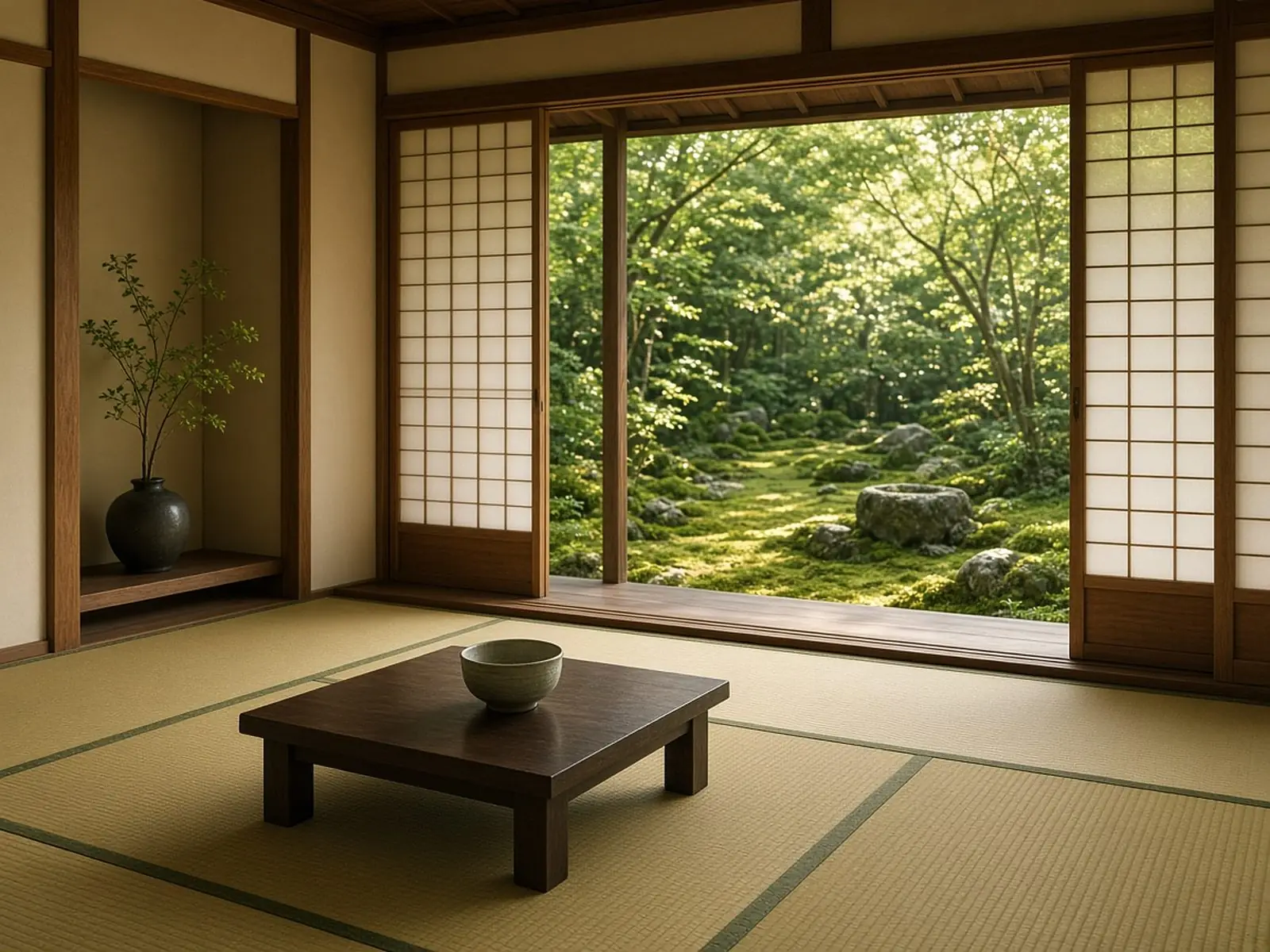
An autumn leaf lets go and rests on the moss. Letting go isn't forgetting; we loosen a little, only when we're ready.
Begin a take to open this part.
My Tea Journal
Sign up to save your reflections
My Tea Journal · Back to the course
One cup at a time.