The Fifth Cup
Kintsugi, finding meaning in repair and renewal
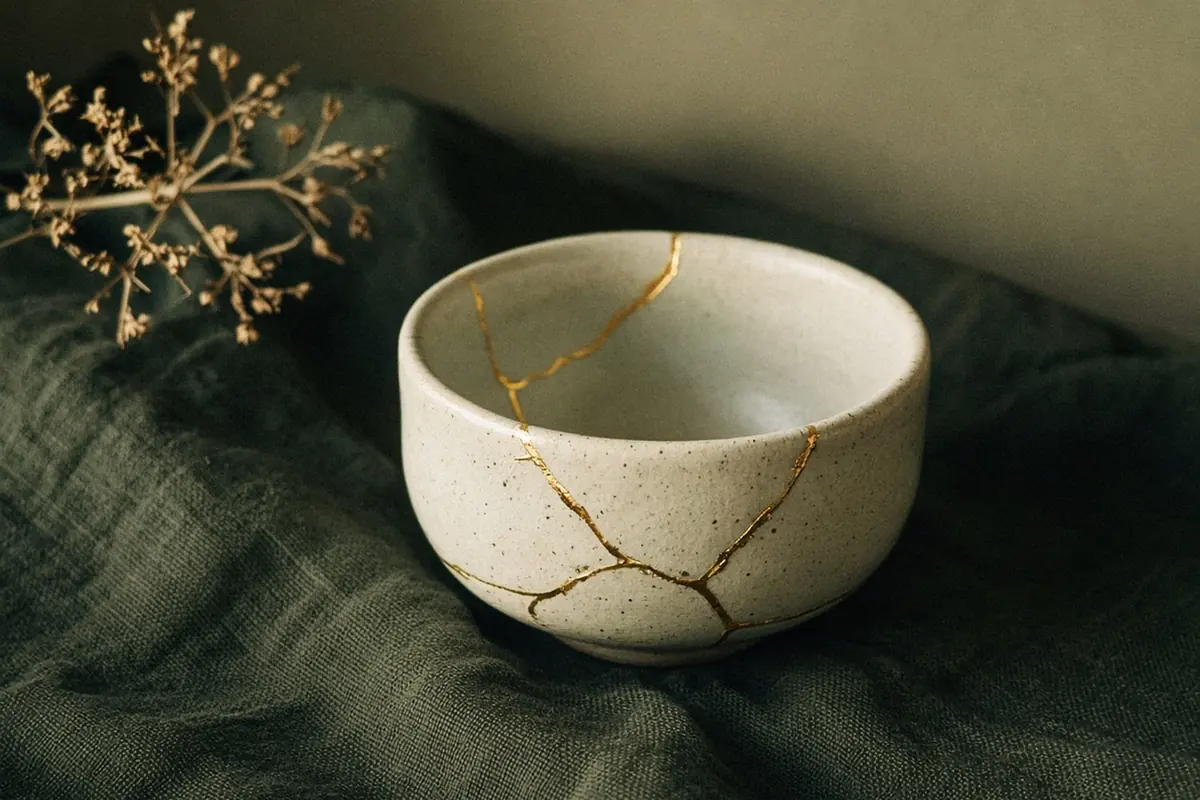
Kintsugi mends broken pottery with lacquer and gold, honouring the cracks instead of hiding them. In this final cup you'll learn to see breaks and losses as part of your story, take small, patient steps toward repair, and bring all five cups together into one practice to return to.
You will learn
- The art and meaning of kintsugi and slow repair with urushi lacquer
- How to meet grief, disappointment and change with patience and kindness
- How to weave the five teachings into one repeatable tea ritual
You'll practise: The golden seam. Write one difficulty, one thing it taught you, and one small step of repair.
Kintsugi material for this class is supplied by Kintsugi Path. Visit https://kintsuginoki.com/.
Sample data
Begin a take on the course page to open Part 1.
Key Japanese concepts
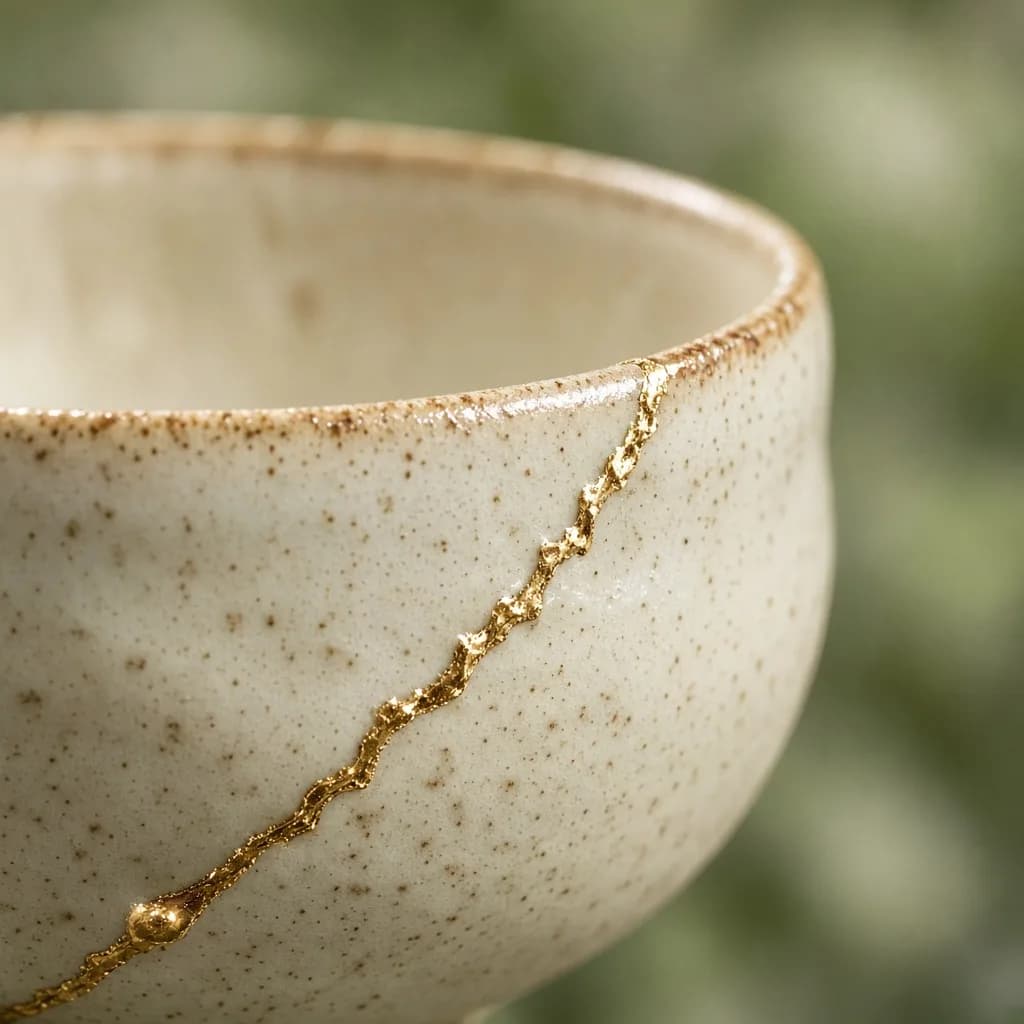
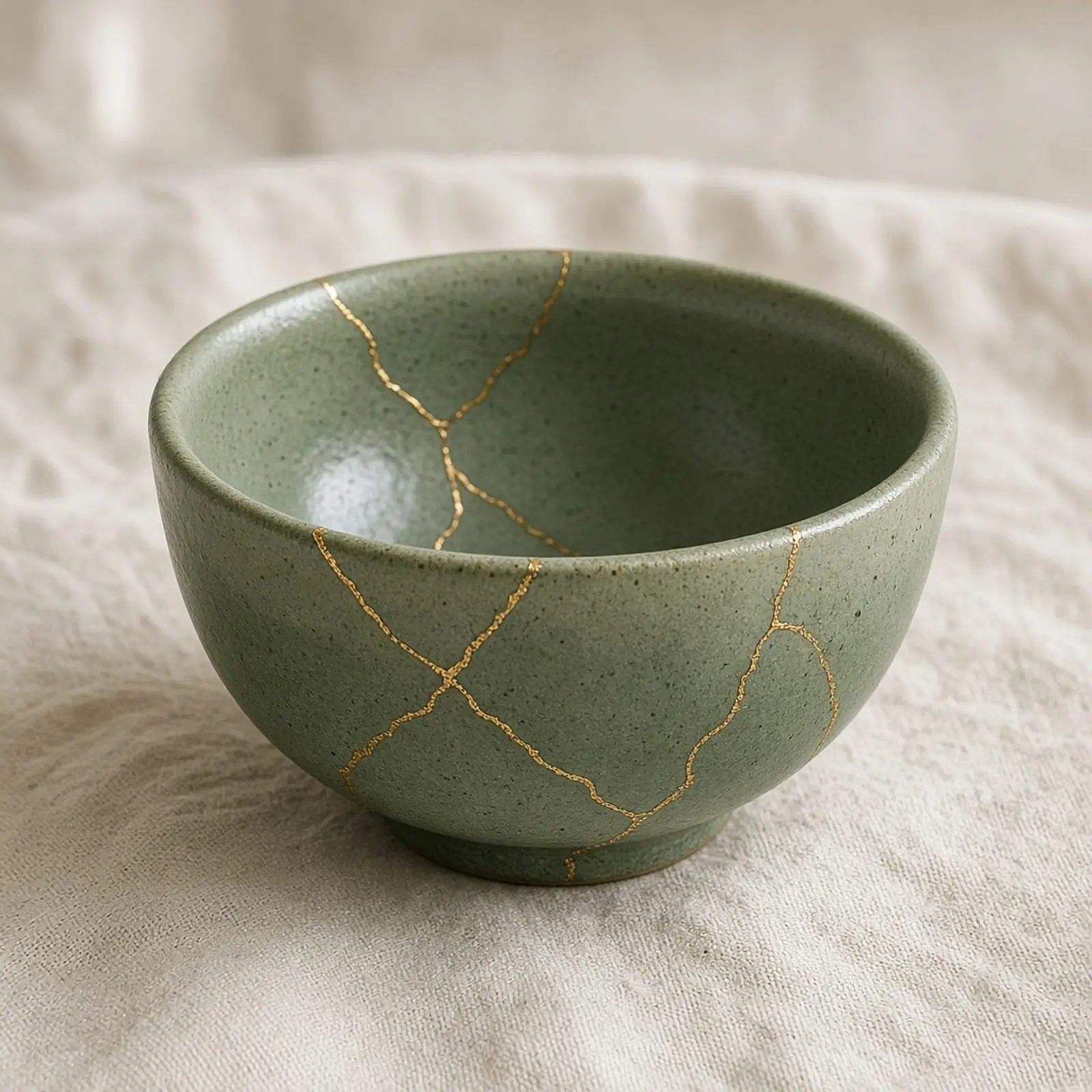
Kintsugi (金継ぎ), "golden joinery" The art of repairing broken ceramics with urushi lacquer, with the seams often dusted or finished with gold. The repair is part of the vessel's story, not something to hide. For many people it's a comforting image for grief and healing.
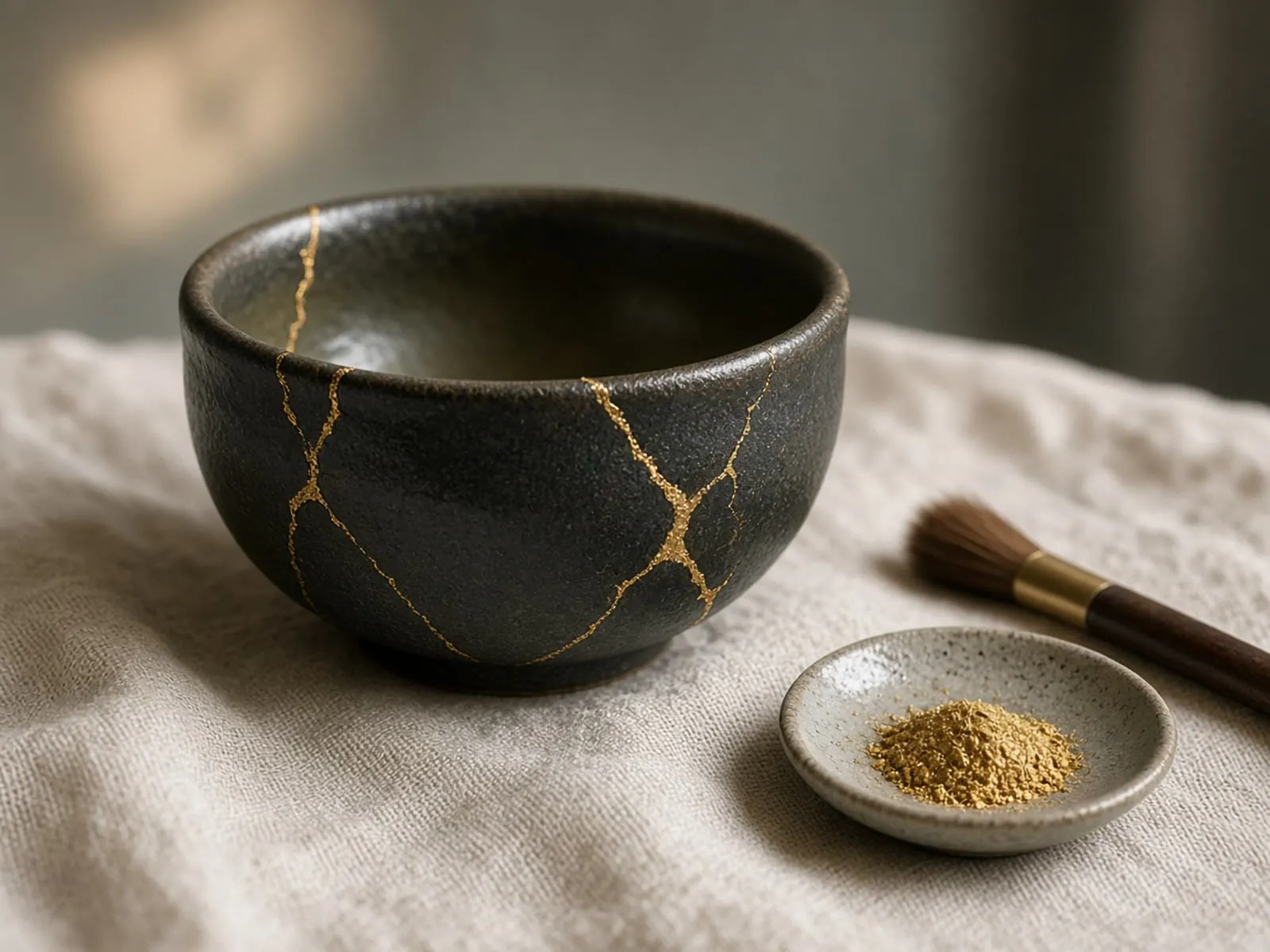
Slow repair Traditional lacquer repair is done in thin layers, each one left to cure before the next, so the process can take weeks or longer. It can't be hurried. Healing often has a similar rhythm: a little care, then rest, then a little more.
The five cups together Arriving (ichigo ichie), preparing with care (wabi-sabi), sharing (omotenashi), the seasons and letting go (mono no aware), and mending (kintsugi). Together they form a simple daily practice you can return to whenever you need it.
A simple practice guide
- Arrive. Sit, soften and notice where you are. This moment happens only once.
- Prepare. Make tea with patient, careful hands, or pour a glass of water.
- Look. Notice any chips, marks or worn spots on your cup: signs of a life of being held.
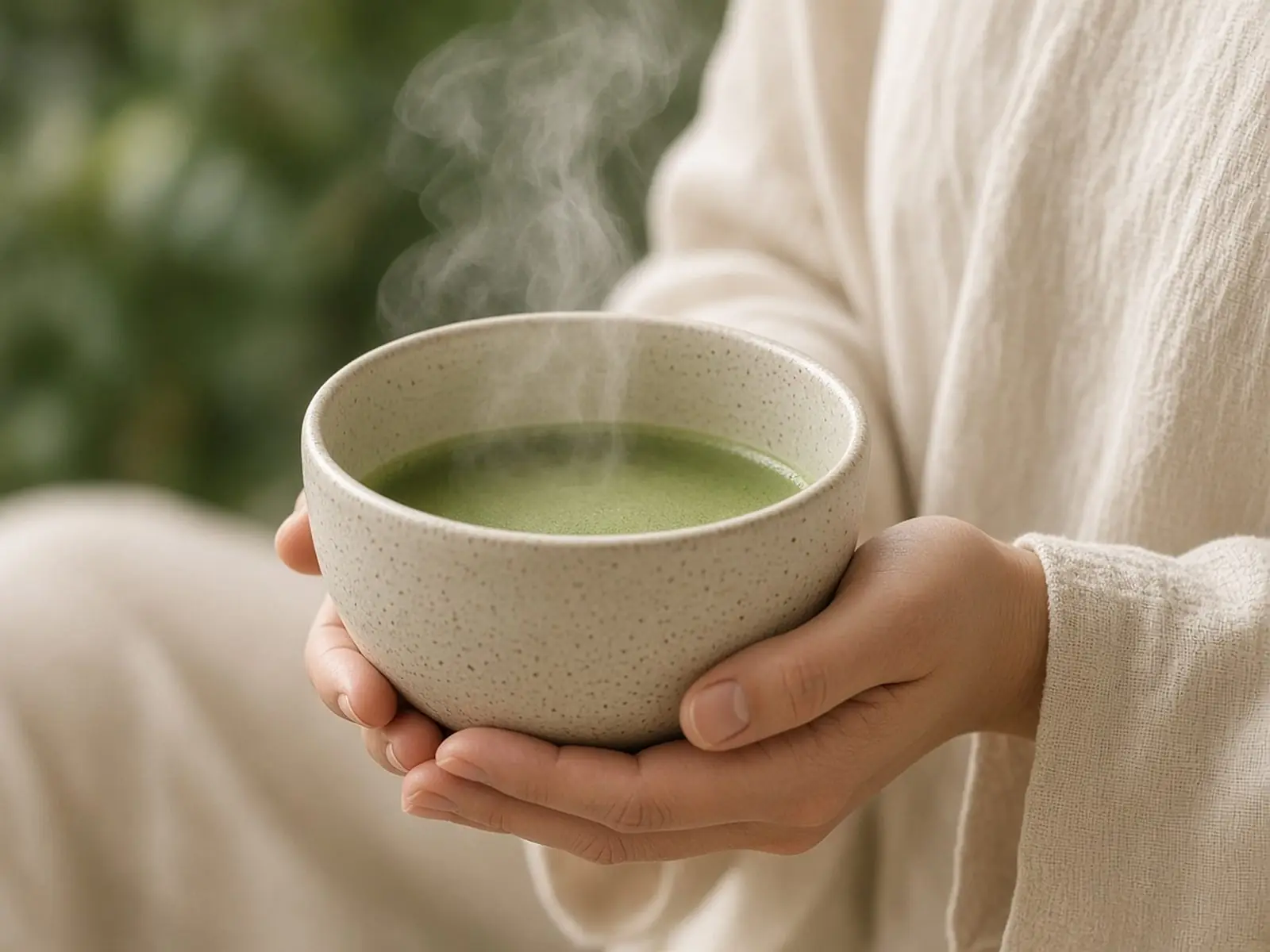
- Hold. Hold the cup in both hands and feel its warmth.
- Sip. Take a slow sip, and let bitter and sweet sit together.
- Picture the gold. Imagine your own bowl with fine golden seams, some old and shining, some still drying.
- Rest. Sit quietly for a while. Nothing needs to be finished.
- Carry it forward. Choose one way to carry the gold into your days.
A short note on kintsugi
Kintsugi is closely associated with the Japanese tea tradition, where treasured bowls were mended rather than discarded. Traditional repairs use natural urushi lacquer, which needs careful handling and slow curing; modern home kits often use synthetic alternatives. If you'd like to try a repair yourself, please follow the safety guidance supplied with your materials.
You don't need any special tea or equipment for this course. What matters most is the attention you bring.
Gentle care
These meditations are for relaxation and reflection and are not a substitute for professional support. If you're finding things hard, please reach out to someone you trust, your GP, or a support service such as Lifeline (13 11 14) or Griefline (1300 845 745).
With thanks
With heartfelt thanks to Kintsugi Path for supplying the kintsugi material that shaped this lesson and this series. Their compassionate guide to grief and repair can be found at https://kintsuginoki.com/.
Thank you for sharing all five cups. You're always welcome to return to any lesson, in any order, whenever you need a quiet cup.
Part 1 · The Golden Seam
4:53
We return to kintsugi in depth: layer-by-layer repair, patience, and a bowl that is not less because it broke.
Begin a take to open this part.
My Tea Journal
Sign up to save your reflections
Part 2 · Five Cups, One Path
4:27
We look back gently on all five cups: arriving, preparing, sharing, letting go and mending, and notice what has stayed with us.
Begin a take to open this part.
My Tea Journal
Sign up to save your reflections
Part 3 · Carrying the Gold
4:45
We picture our own golden seams and choose one way to carry the gold forward, closing the series with thanks.
Begin a take to open this part.
My Tea Journal
Sign up to save your reflections
My Tea Journal · Back to the course
One cup at a time.